Two layers. One boundary.
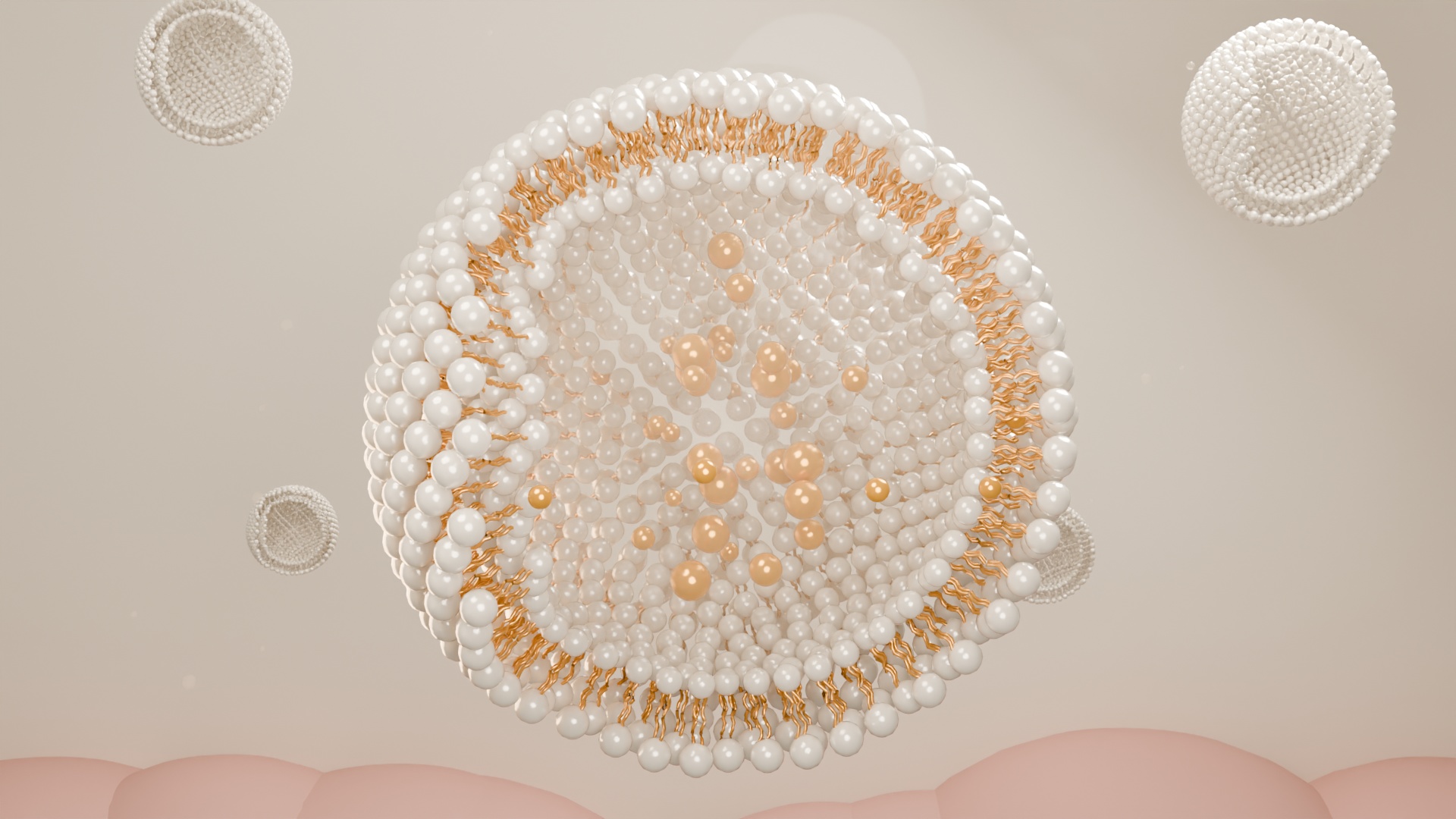
A phospholipid has a water-attracting head and water-avoiding tails. In a bilayer, the heads face the water on either side. The tails face inward, toward each other.

Liposomal science · A closer look
Meet the small structure behind liposomal liquid.
There’s a little more to it than meets the eye.

An illustrative journey. Structures and scale are simplified.
01 / Inside a liposome
A liposome is a tiny vesicle formed by a lipid membrane around a water-based interior. Look closer at the parts that give it its structure.
Select a structure
A phospholipid has a water-attracting head and water-avoiding tails. In a bilayer, the heads face the water on either side. The tails face inward, toward each other.
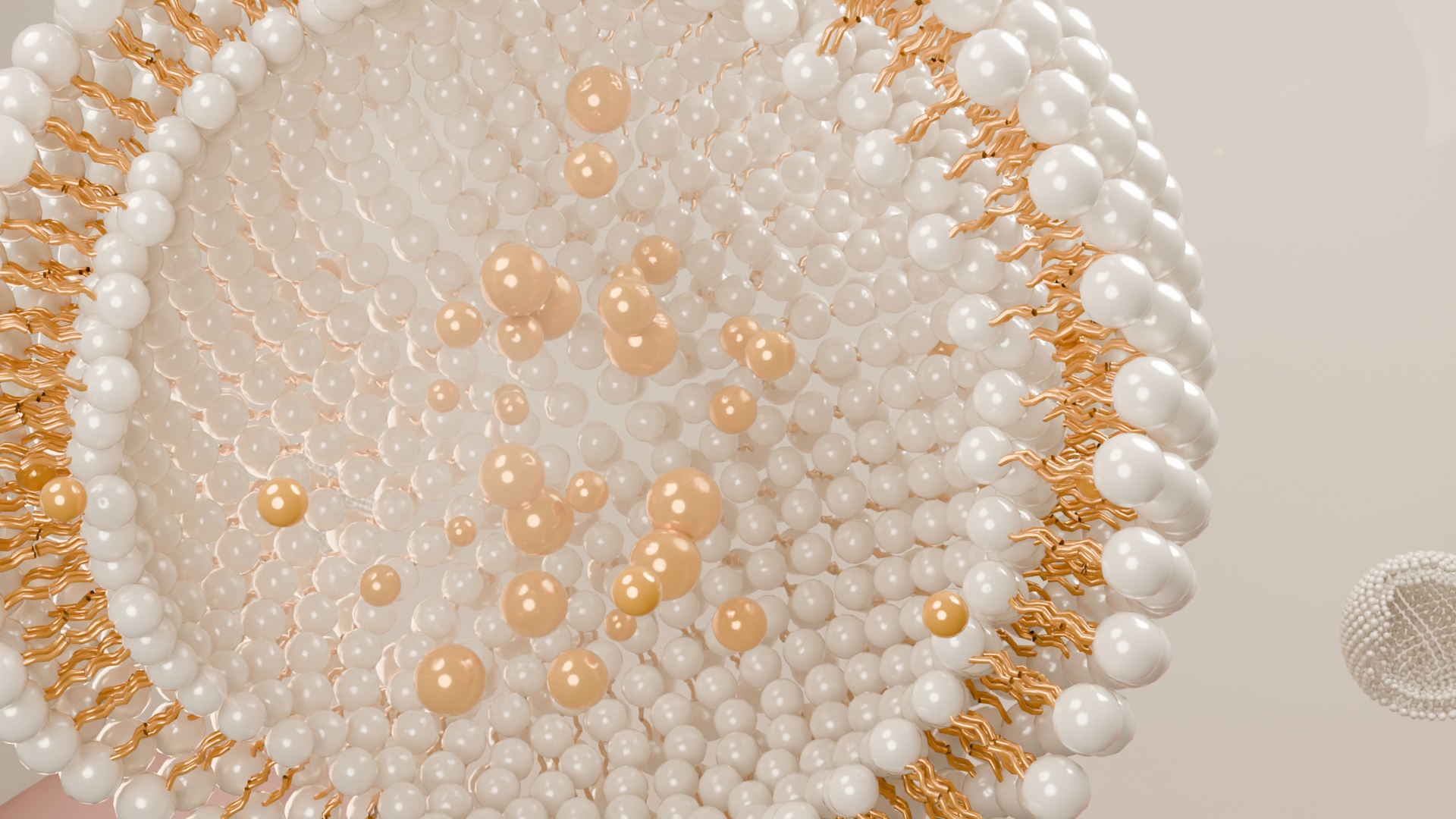
Inside the membrane is a water-based compartment. Water-soluble compounds can be enclosed here. The core and the surrounding liquid are separated by the phospholipid bilayer.
Depending on their properties and the formulation, compounds can be held in the aqueous interior or associated with the lipid bilayer. Encapsulation is a structural description, not a measure of absorption.
02 / Why structure matters
Water on the outside.
Water on the inside.
A remarkable membrane between.
The arrangement of phospholipids creates a compartment. That is the starting point for encapsulation: holding compounds within a structure.
Its water-facing surfaces and water-avoiding interior create different environments within one vesicle. This allows compounds with different properties to associate with different parts of the liposome.
Lipid composition, particle size, the surrounding liquid, storage conditions and the compounds being carried can all influence a formulation. A liposomal structure alone does not establish stability through storage or digestion; that needs to be tested for the specific formulation.
03 / Through a changing environment
Taking a supplement, releasing its contents and absorbing a nutrient are different events. Understanding each one helps us ask better questions.
The digestive environment changes as a supplement moves through it. Acidity, enzymes and bile can affect both the nutrient and its formulation.
Encapsulated compounds must become available for absorption. How and when they are released depends on the compound, the carrier and its environment.
What reaches circulation is a separate question from what was swallowed. The nutrient, dose, formulation and person all matter.
No single illustration describes every formulation in a person. The structures shown here explain a general delivery approach. They do not demonstrate intact liposomes crossing the intestine, targeted delivery to cells, or the absorption performance of a hūma product.
04 / What research can tell us
Bioavailability asks how much of a substance becomes available to the body, and how quickly.
Researchers may track nutrient concentrations in blood over time. Those measurements help compare specific formulations. They do not, on their own, establish a health benefit.
Our approach to evidenceA closer look at one study
A randomized crossover trial compared LipoVantage® liposomal vitamin C, standard vitamin C and placebo. The liposomal formulation produced higher measured vitamin C concentrations and exposure in plasma and white blood cells.
Purpura and colleagues, European Journal of Nutrition (2024), used a double-blind, placebo-controlled design. The results concern the formulation, dose and participants studied. This was a single-dose study, not a demonstration of long-term health outcomes.
Read the published research ↗This study evaluated a specific vitamin C formulation, not the hūma collection. No finished-product absorption study for hūma is presented here.
From science to your daily measure
Liquid is the format. Liposomal describes the delivery approach. The label tells you what is in your serving.


